Beers World Stage
Lessons from the World Beer Cup

2026 World Beer Cup Winners
There is no environment quite like the World Beer Cup.Often called "The Olympics of Beer," the 2026 edition was a monumental gathering of sensory professios, and being back at the judging table was a profound honor. While the final awards ceremony took place in Philadelphia this month, my personal journey for this competition began weeks earlier in the crisp, high-altitude air of Louisville, Colorado.
Colorado served as the quiet, focused heart of the first judging session. If my time in March in Brazil was about regional heart and the singular warmth of the Mineiro people, Louisville was about the intense, hushed precision of the first round. With a total of 8,166 entries from over 50 countries, the WBC remains the undisputed global benchmark. It is a marathon of concentration that tests every bit of your sensory training. You might spend your morning dissecting the subtle floral notes of a German-style Pilsner, only to spend your afternoon navigating the intense, pillowy mouthfeel of a Juicy or Hazy IPA.
A Meeting of the Minds in the Rockies
What makes the World Beer Cup truly unique isn't just the quantity of the samples, but the quality of the people sitting across from you. The 2026 panel was a stunning tapestry of international expertise, with 255 judges representing 37 different countries. In Boulder, I found myself sharing flights with judges who had traveled from Belgium, Germany, Japan, Brazil, Italy, Argentina, and beyond.
This diversity is the competition’s greatest strength. When you evaluate a classic European style alongside a judge who grew up in the shadow of the brewery that defined that style, the conversation elevates. We aren't just checking boxes; we are debating the historical intent of a recipe and how modern raw materials are shifting its profile. Despite the dozens of languages spoken in the judge's hall, our shared vocabulary is written in the language of beer, at least in the greatest competitions. We use the same technical descriptors for ethyl acetate, the same reverence for head retention, and the same pursuit of balance. To sit in a room with the world’s most elite palates is a humbling reminder that while we come from different cultures, our professional mission is singular.
The Sensory Marathon
From my perspective, judging at this scale requires a specific kind of mental and physical stamina. People often imagine that judging beer is a leisure activity, but by the third day of evaluation, your palate is a finely tuned instrument that requires constant calibration. We rely on water and crackers to reset our palates between flights.
The pressure is palpable. You are acutely aware that behind every plastic-sleeved sample is a brewery that has poured its heart, capital, and soul into that liquid. A Gold, Silver, or Bronze medal at the WBC can change the trajectory of a small brewery overnight. We carry that responsibility with us into every flight. We aren't just looking for what we "like"; we are looking for technical perfection, stylistic accuracy, and that "world-class" spark that sets a winner apart from a sea of very good entries.
Global Styles, Local Mastery
What struck me most this year was the incredible global reach of classic styles. One of my favorite moments of the competition was seeing Craft Beer Base from Osaka, Japan, take home a Silver in the German-Style Pilsner category. To see a Japanese brewery excel in a style so deeply rooted in European tradition is a beautiful reminder that technical mastery is universal. Whether you are in a schoolhouse-turned-brewery in Massachusetts, a high-tech facility in Osaka, or a cellar in Bavaria, the pursuit of the perfect beer is the exact same.
The results also highlighted the continued elevation of the Brazilian scene, which I had just witnessed in Uberlândia. Seeing South American breweries stand toe-to-toe with the world's most established brands and win hardware in highly competitive categories was a personal highlight. It felt like a full-circle moment, seeing the growth of the industry I love celebrated on such a massive scale.
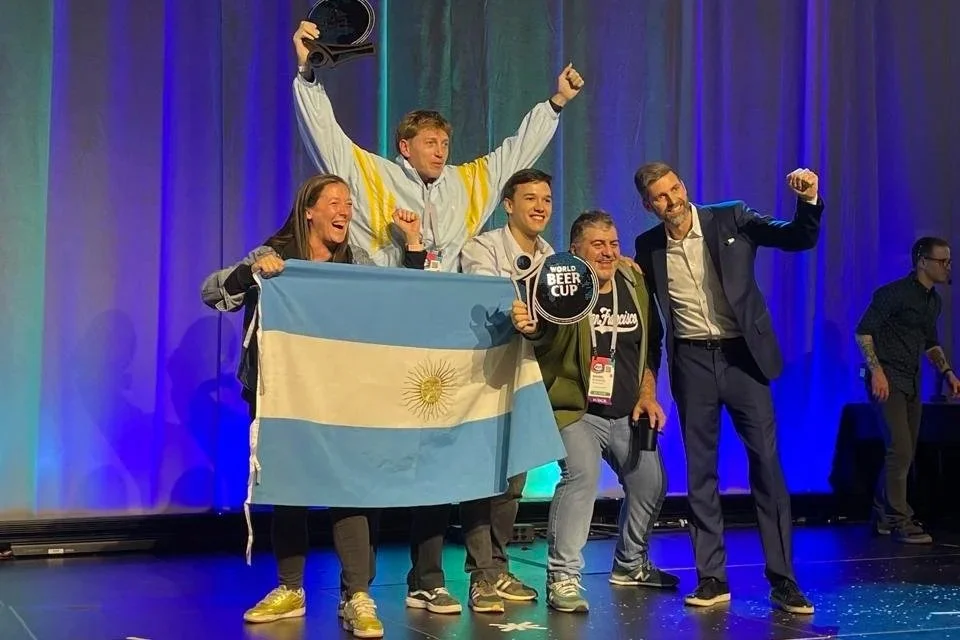
Argentina at 2026 World Beer Cup
The Verdict of Philadelphia
As the 2026 World Beer Cup drew to a close and the final awards were announced in Philadelphia, the feeling in the industry was one of collective exhaustion and immense pride. We had evaluated over 8,000 samples across the various sessions, whittling them down to the absolute best examples of what the modern industry has to offer.
Judging at this level is a humbling reminder of the sheer amount of skill and dedication it takes to get a beer from the grain silo to a retail shelf. When you see a WBC medal displayed on a tap handle or a bottle, you aren’t just looking at a marketing badge; you’re looking at a beer that stood its ground against other beers from across the globe, was scrutinized by the most elite international palates, and emerged triumphant.
The 2026 competition gave us a snapshot of an industry that is more diverse, technically proficient, and innovative than ever before. For those of us lucky enough to hold a seat at the table—whether in the quiet warehouse in Colorado or the halls of Philadelphia—it was a reminder that while our individual journeys may start in different corners of the world, we are all chasing the same thing: excellence in the beer glass.